Cellular longevity
SIRT1 gene expression increased in a dose-dependent manner in human dermal fibroblasts. Extracellular vesicles from Panax ginseng have been reported to improve senescent phenotypes in the same cell type.

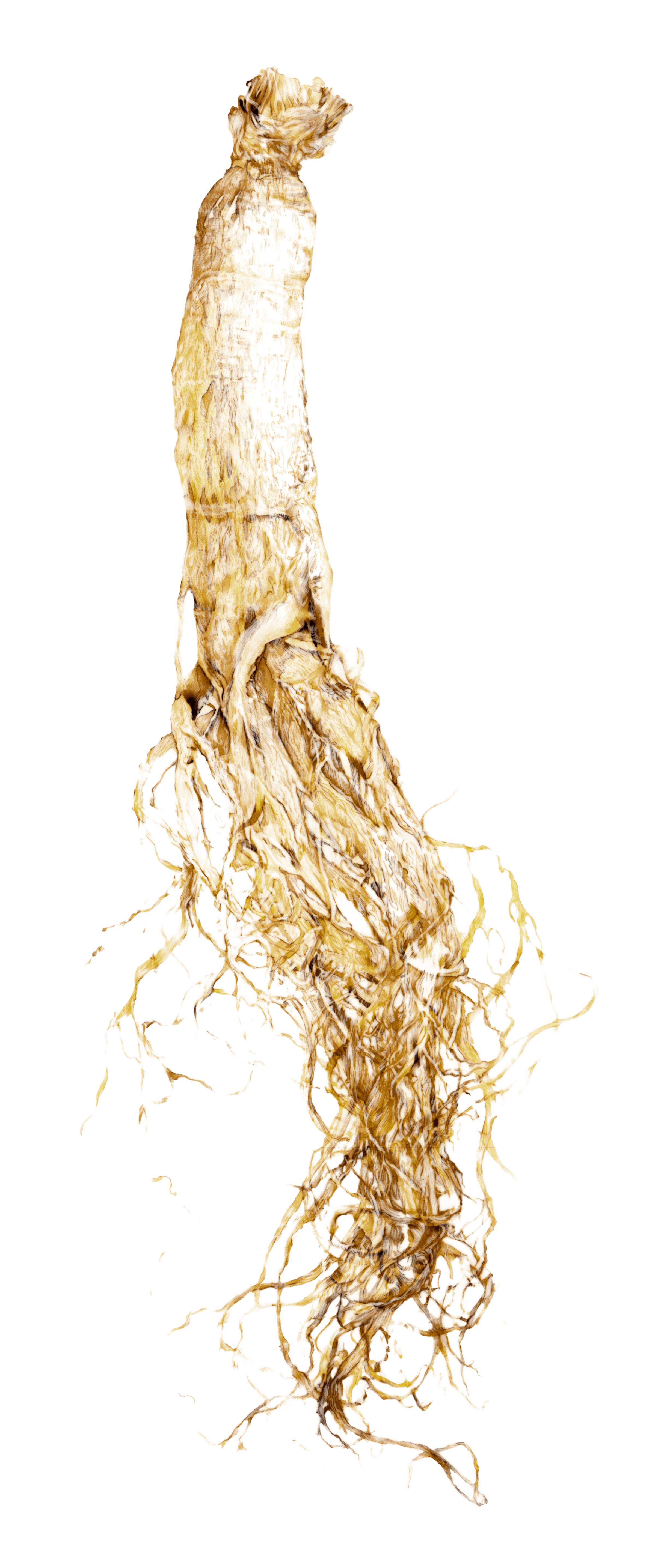
Panax ginseng C.A. Meyer, root
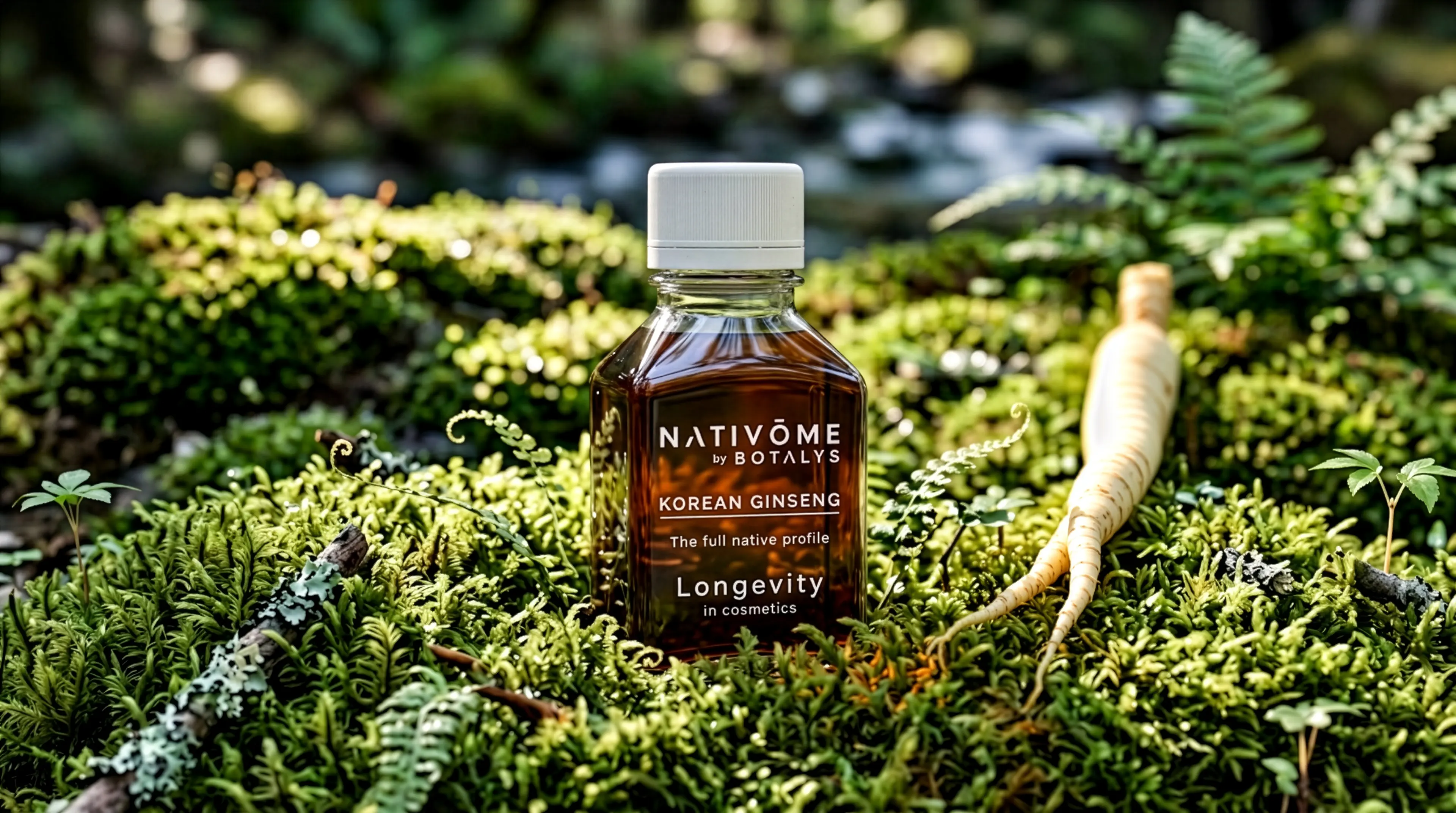
Cold-pressed juice from an aseptically grown ginseng root. No heat, no solvent, no drying step. The complete native profile of the root, in the proportions the plant produced it.
Positioned for anti-aging, on the cellular longevity axis. The first preclinical data measured on this material are below.
What is it
The root is harvested from a sealed cleanroom and pressed within hours, without drying and without steaming. The juice is clarified by sterile filtration and standardized by HPLC on every batch. Most botanical actives are a fraction pulled out of the plant and rebuilt in a carrier. This one is the plant, stabilized for shelf life without propylene glycol.
The published literature on Panax ginseng was almost entirely built on dried, steamed or fermented root. Steaming converts the polar ginsenosides into deglycosylated forms and creates Maillard reaction products that fresh root does not contain. Nativome Ginseng is a different material from the one most of that literature describes.

SIRT1 gene expression increased in a dose-dependent manner in human dermal fibroblasts. Extracellular vesicles from Panax ginseng have been reported to improve senescent phenotypes in the same cell type.
Upregulation of aquaporin 3, filaggrin, loricrin and hyaluronic acid synthases. Shown for compounds isolated from fresh ginseng root, and benchmarked against retinol.
Inhibition of MMP-1 and modulation of the dermal matrix through Smad signaling. Replicated across independent groups and multiple cell lines.
Strong, replicated by independent groups in more than one model. Moderate, shown by a single group or in a single model. Emerging, mechanistic signal only. Measured on Nativome Ginseng, generated on the material sold under this name.
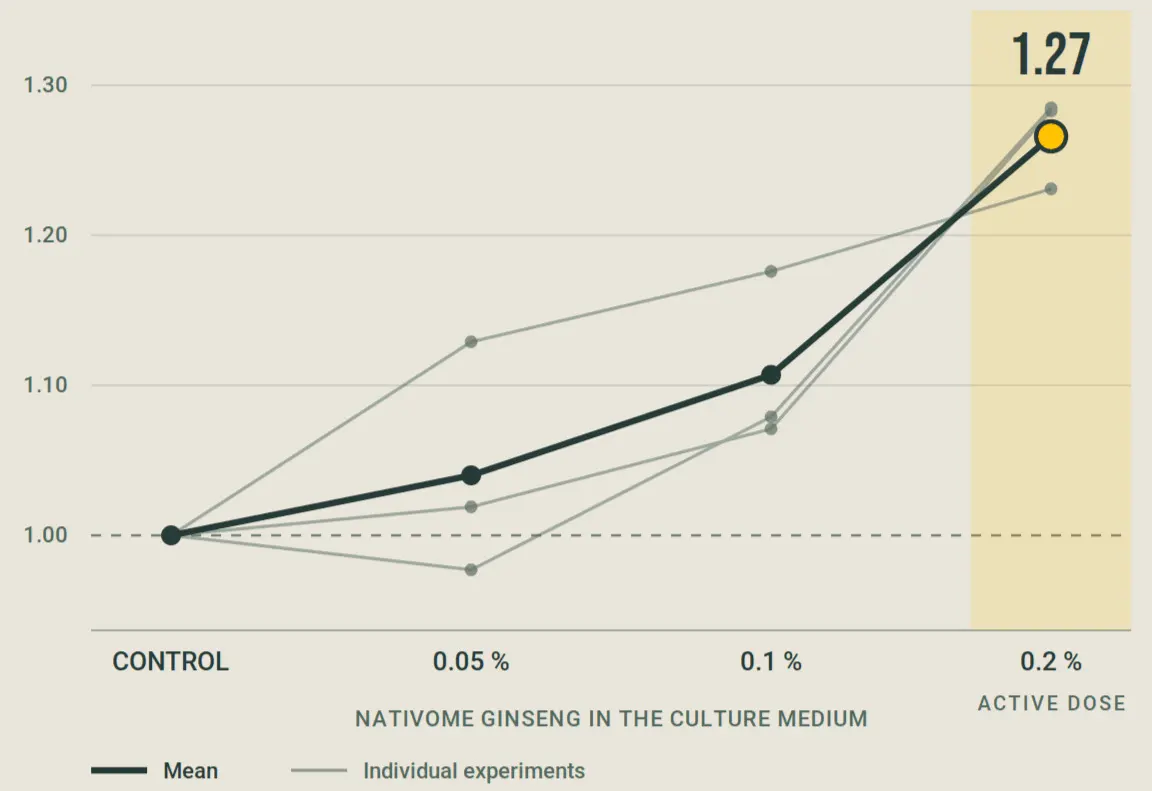
SIRT1, dose-dependent, in three independent experiments
Nativome Ginseng increases SIRT1 gene expression in adult human dermal fibroblasts. The response follows the dose in every experiment, and the three experiments agree with each other to within four percent at the active dose.
SIRT1 is one of the best-characterized nodes of the cellular longevity axis in skin. This is the first evidence generated on this material, rather than on the wider literature that surrounds the plant.
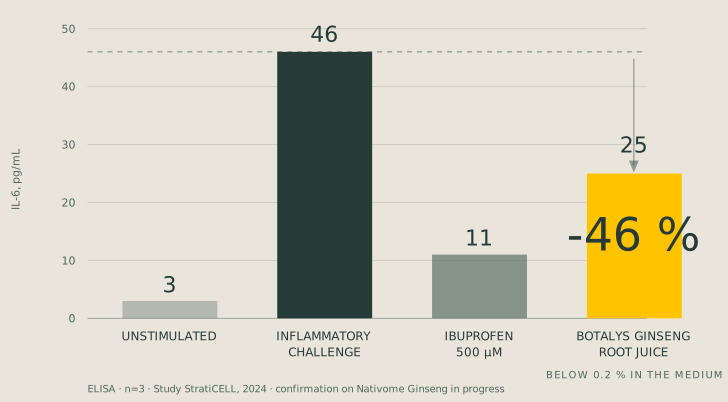
Botalys ginseng root juice reduced IL-6 release in human keratinocytes under inflammatory challenge, at every concentration tested below 0.2%, by up to 46%. Four of five Botalys root materials reduced IL-6 in the same study. Confirmation on Nativome Ginseng is in progress.
Saponins, polysaccharides, phenolic acids, phytosterols and peptides, and the skin pathways each family acts on.
Compound families
Molecular targets
Skin outcomes
Evidence strength above reflects the published work on Panax ginseng root compounds, not on the Botalys ingredient itself. Studies conducted on Nativome Ginseng are reported separately and identified as such.
Human clinical work on ginseng is limited. A small number of studies with instrumental outcomes, twenty to twenty-three subjects, four to eight weeks, none of them on fresh root material. We publish this because a formulator will find it anyway.
| Cosmetic claim | Molecular target | In vitro | In vivo animal | Human clinical | Evidence |
|---|---|---|---|---|---|
| Collagen preservation | MMP-1 inhibition | Supported | Supported | Not supported | Strong |
| Collagen synthesis | COL1A1 / COL1A2 induction via Smad | Supported | Not supported | Not supported | Moderate |
| Skin barrier | Filaggrin, loricrin, AQP3, KRT1, TGM-1 | Supported | Supported | Not supported | Strong |
| Hydration | Hyaluronic acid synthases 1/2/3, AQP3 | Supported | Not supported | Not supported | Strong |
| Anti-inflammatory | NF-κB, COX-2, IL-1β, IL-6 suppression | Supported | Not supported | Not supported | Strong |
| Antioxidant | Nrf2 activation, ROS reduction | Supported | Supported | Not supported | Moderate |
| Even tone | Tyrosinase, MITF, CREB inhibition | Supported | Supported | Supported | Strong |
| Wrinkle and photodamage | Instrumental profilometry, roughness | Not supported | Supported | Supported | Moderate |
| Cellular senescence | Extracellular vesicle signaling | Supported | Not supported | Not supported | Emerging |
| Nativome Ginseng | COL1A1, HAS2, SIRT1, SIRT2 dose response | Supported | Not supported | Not supported | In progress |
Evidence grades follow the scale published on this page. Strong: replicated by independent research groups in more than one model. Moderate: shown by a single group or in a single model. Emerging: mechanistic signal only, or results not yet available. All grades except the last row describe the published record on Panax ginseng root compounds, not on the Botalys ingredient. Human clinical studies in this field were conducted on dried, steamed or fermented material, at twenty to twenty-three subjects over four to eight weeks.
Formulation
Where the ingredient carries the claim.
Default inclusion across a range.
Formulation minimum, not an efficacy threshold.
The dose-response curve for this material is being established in preclinical study. Finished formula tolerance should be confirmed by the formulator.
INCI name, appearance, solubility, pH range, preservative system, stability data and allergen statement are supplied with the technical data sheet and the safety data sheet.
Documentation is released to qualified laboratories under a confidentiality agreement.
Technical documentation and formulation samples are available to qualified laboratories.
This website uses cookies
By continuing to browse this site, you agree to the use of Cookies to perform traffic analysis.
General Data Protection Regulation